
The La Libertad region, in northern Peru, holds one of the best-kept secrets of South American archaeology. If you are planning an experience that combines ancient history, desert landscapes, and a vibrant living culture, the Moche Route in 3 days is the perfect itinerary.
Table of Contents
Since 2012, this route has established itself as a mega sports, cultural, and entertainment event known as the Shi Muchik Fest. Just as the Sun was the supreme god for the Incas, the Moon was for the Mochicas the great deity to worship. Today, we have the opportunity to revive this ancient cult, giving it the true dimension it had in ancient Peru.
In this article, we present a complete itinerary so you can experience the Moche Route in its three main venues: Trujillo, Pacasmayo, and Chiclayo.
Why explore the Moche Route?
Shi Muchik Fest is not just a festival; it is a gateway to one of the most complex and artistic cultures of pre-Columbian America. This festival considerably boosts the Moche Route, showcasing its grandeur, wealth, and history, and spreading Mochica culture worldwide, which attracts increasingly conscious and curious tourism.
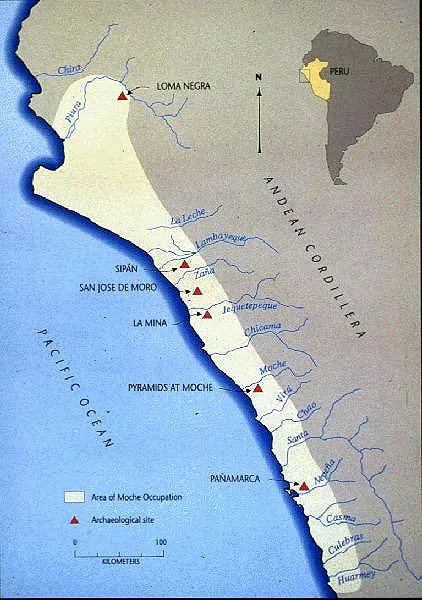

3-Day Itinerary along the Moche Route
Day 1: Trujillo and the heart of Mochica culture
Your journey begins in Trujillo, the regional capital and the mandatory starting point for any traveler who wants to explore the Moche Route.
- Morning: Visit the Huacas del Sol y de la Luna Archaeological Complex. This site is essential for understanding the Mochica worldview. Here you can appreciate polychrome murals in incredible condition and the worship of the main deity, Ai Apaec.
- Afternoon: Explore the Historic Center of Trujillo, declared a UNESCO World Heritage Site. Visit the Plaza de Armas, the Palace of Culture, and the Rufino Eizaguirre Museum.
- Night: Enjoy the local gastronomy. Trujillo is the birthplace of ceviche and dishes such as shámbar.
Tip: If you visit Trujillo during the August full moon, don’t miss the Mochica reenactments of the Shi Muchik Fest, which bring history to life.
Day 2: Pacasmayo, the hidden destination of the Route
Just one hour from Trujillo, Pacasmayo is a jewel that many people overlook. However, it is one of the main venues of the Shi Muchik Fest and offers a unique experience.
- Morning: Visit the Huaca San José de Moro. This site is crucial because the royal tombs of the priestesses of the Lord of Sipán were found here, offering a direct view of Mochica religious power.
- Afternoon: Explore the town of Pacasmayo and its beautiful beaches. Enjoy the tranquility of the landscape and the warmth of its people.
- Night: Participate (if it coincides with the date) in the Cabalgata de Shi Muchik or open-air concerts, which are a central part of the contest and the festival celebration.

Day 3: Chiclayo, the Legacy of the Lord of Sipán
The third day takes you to Chiclayo, the gateway to Sipán, where one of the most important royal tombs in the world is located.
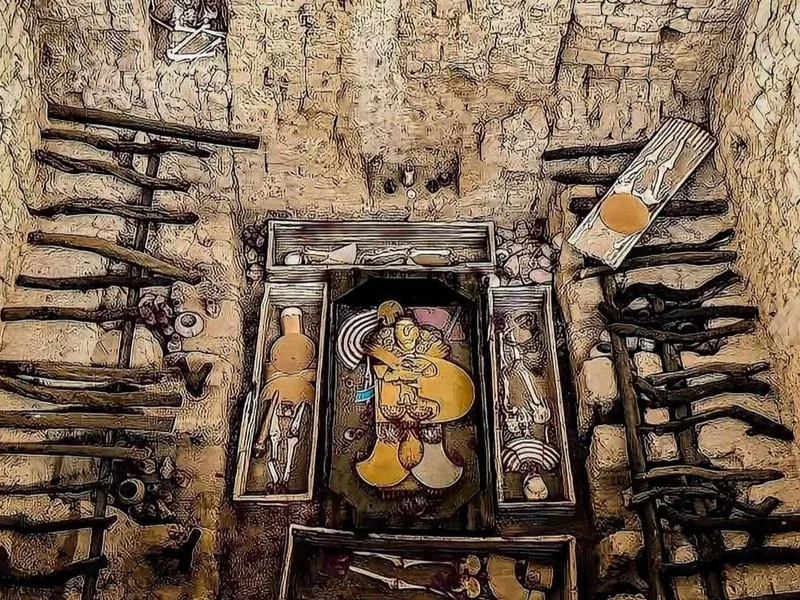
- Morning: Visit the Royal Tombs of Sipán Museum in Chiclayo. Here you can see the original funerary objects of the Lord of Sipán, including his gold, silver, and turquoise jewelry.
- Afternoon: If time permits, visit the Huaca Rajada itself in the countryside, where the original excavation took place. Then, return to Chiclayo to enjoy its famous nightlife and gastronomy.
- Closing: Before you leave, make sure to participate in the activities of the Shi Muchik Inter-Museum Contest, an initiative that brings together the cultural institutions of the entire route in an event of knowledge and entertainment.
Experiencing the Shi Muchik Fest: More than a trip, an experience
Shi Muchik Fest diversifies and decentralizes the tourism offer currently concentrated in southern Peru. By exploring the Moche Route on your own feet, you join a celebration that unites past, present, tradition, modernity, culture, and entertainment.
Participating in this festival means living a unique experience that connects you with the rituals of the past and the energy of the present. The celebration of Shi Muchik Fest is not only for tourists; it is for anyone who wishes to understand the true dimension of ancient Peru’s history.
Practical tips for your trip
- When to go: The best time is during the August full moon, when the Shi Muchik Fest is celebrated. However, the Moche Route is open all year round.
- Transportation: The route is traveled by private vehicle or organized tours. The distances between Trujillo, Pacasmayo, and Chiclayo are short, making the journey easy.
- What to bring: Sunscreen, water, comfortable footwear for walking around the huacas, and light clothing.
- Gastronomy: Don’t leave without trying the chicha morada de jora and the fresh seafood of the Liberteño coast.
Ready to experience the Moche Route?
Whether you visit the Huacas del Sol y de la Luna, the Royal Tombs of Sipán, or the beaches of Pacasmayo, you will be participating in the revitalization of one of the most fascinating cultures in the Americas.
Find out more articles and information on our blog, or visit our Virtual Store and Historical Gallery to take a piece of Mochica culture home with you. The Moche Route awaits you; are you ready to revive this ancient cult with us?

Do you have more questions about the festival?
Contact us to plan your trip to the Moche Route.
 Contactar
Frequently asked questions
-
When is the Shi Muchik Fest celebrated and why is the full moon important?
The Shi Muchik Fest takes place during the full moon of August. For the Mochica culture, the Moon was the great deity to worship (just as the Sun was for the Incas). Celebrating on this date allows the ancient cult to be revived, giving it the true historical dimension it had in ancient Peru, with open-air reenactments and rituals that only occur under the light of the full moon.
-
Does the 3-day itinerary include the three main cities of the festival?
Yes, the Shi Muchik Fest has international projection and features the cities of Trujillo, Pacasmayo, and Chiclayo as its main venues. The 3-day itinerary is designed to visit these three venues, allowing the festival to diversify and decentralize the tourism offer, showcasing the grandeur and wealth of the entire region and not just one specific point.
-
What cultural and sports activities take place during the festival?
Cabalgata de Shi Muchik: Equestrian routes through archaeological sites.
Shi Muchik Inter-Museum Contest of the Moche Route: An event that brings together the cultural institutions of the region.
Mochica reenactments: Theatrical and ceremonial performances that revive ancient history, such as the Pataknamu ceremony. -
Is it feasible to visit Trujillo, Pacasmayo, and Chiclayo in just 3 days?
Yes, it is completely feasible. These three cities are the main venues of the Shi Muchik Fest and are relatively close to each other on the northern coast of Peru. The 3-day itinerary is optimized to make the most of your time: one day for the cultural heart in Trujillo, one for the hidden jewel in Pacasmayo (Huaca San José de Moro), and the last for the royal legacy in Chiclayo (Sipán). This allows for a complete experience without feeling rushed, taking advantage of the fact that the festival boosts mobility and connection between these regions.
-
What type of experience does the Moche Route offer beyond archaeological visits?
The Moche Route, and the Shi Muchik Fest in particular, offer an experience that unites past, present, tradition, modernity, culture, and entertainment. It is not just about seeing ruins; it is about living a unique experience that includes local gastronomy, direct contact with nature in the dry forests (through the horseback rides), interaction with local communities (as in Pomac and Cañoncillo), and sports and artistic events. It is immersive tourism that diversifies Peru’s tourism offer, showing that the region has much more to offer than the tourism concentrated in the south of the country.